

Support CMDR
Want to help sustain our work studying marine debris? Check out the following options to support us:
Who We Are
Established in 2019 as a joint institute between Hawaii Pacific University and the National Institute of Standards and Technology (NIST)'s Chemical Sciences Division's Biochemical and Exposure Science Group. CMDR's work strives toward the highest standards of chemical measurement science and has expanded to support the NIST Circular Economy Program.
167,785 lbs
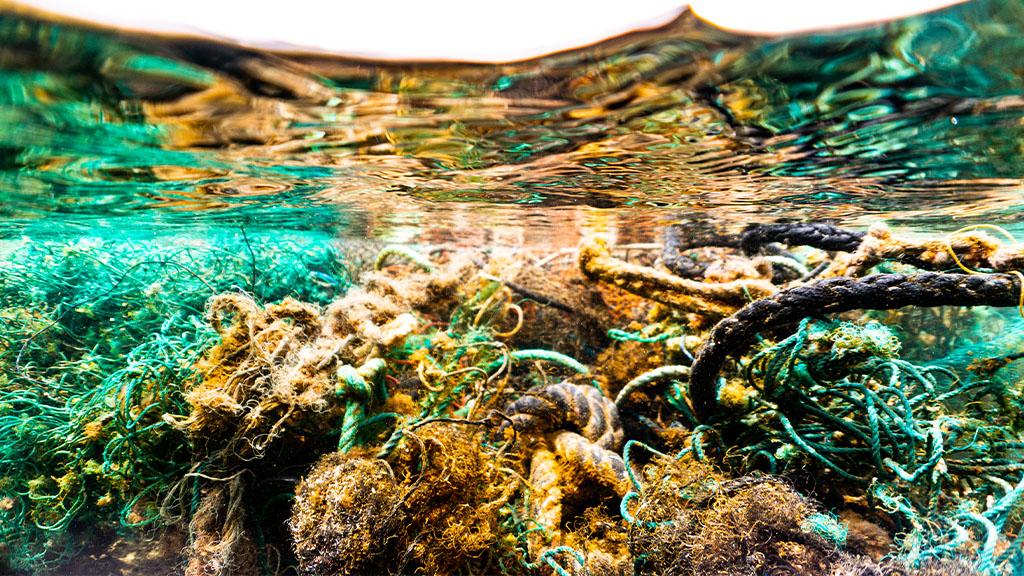
Derelict Fishing Gear removed through our bounty project
80,000+
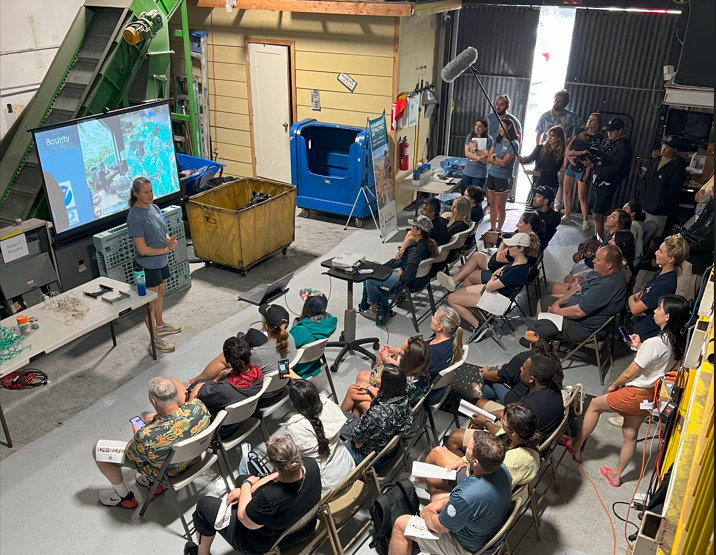
Youth and adults engaged in outreach events
42
Peer-reviewed publications
What We Do
We investigate the quantities, sources, transport, fate, impacts and reuse of plastic marine debris, from megaplastics down to the molecular level. We then share our new-found knowledge to empower ocean stewardship. The ultimate goal of all CMDR activities is a trash-free ocean!
Core Research Areas
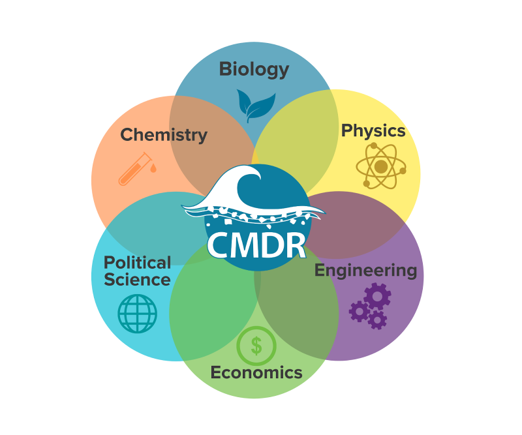
Located within the North Pacific Gyre, CMDR is the global hub of excellence for plastic pollution research. For such an interdisciplinary field, expertise spans across the basic scientific disciplines with an emphasis on the marine environment. Academic, government, and industry scientists collaborate together to advance the knowledge of plastic pollution, while working with policymakers to find and implement viable solutions.
Biology
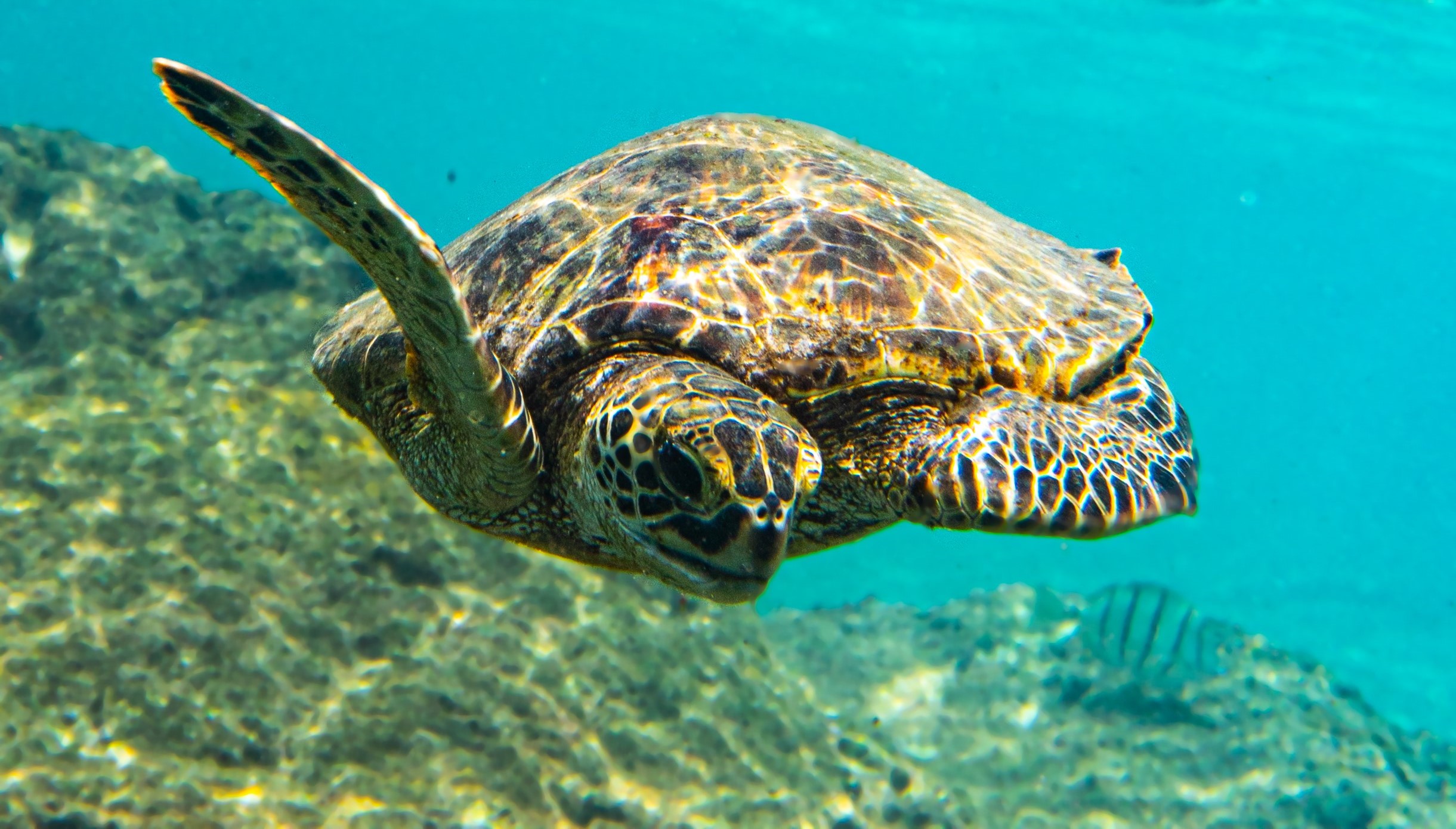
We study biological impacts, such as entanglement, ingestion, and toxicity of plastic pollution on marine species to understand the adverse impacts on individuals to ecosystems.
Chemistry
We identify the polymers, additives, and surface chemistry of plastic pollution to understand the physical and chemical properties.
Physics
We investigate the physical transport and fragmentation process of plastic in the environment to understand its sources and fate.
Engineering
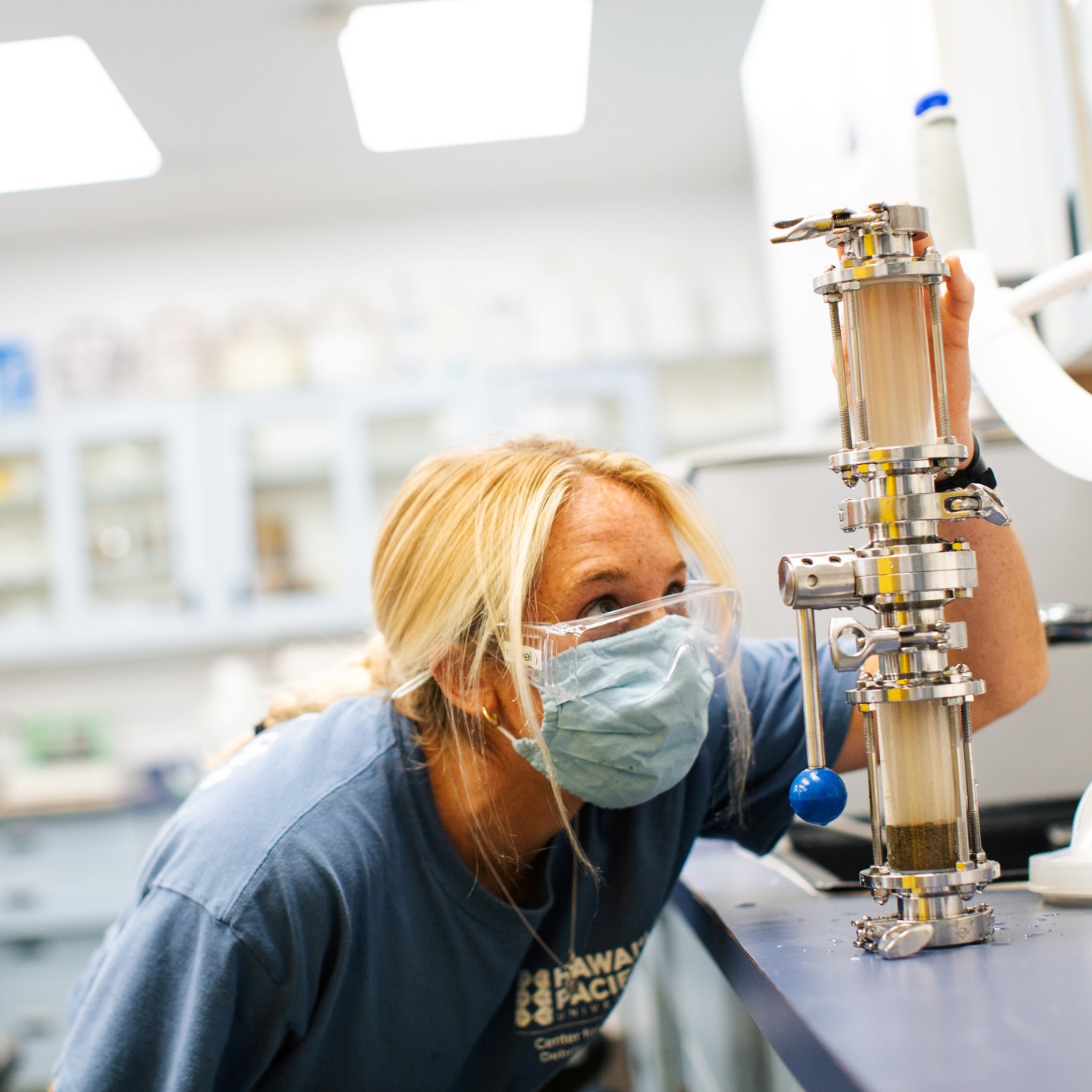
We develop optimal methods to quantify plastic pollution for accurate analysis and reporting, as well as engineering solutions to reuse plastic pollution in infrastructure.
Economics
We assess the economic impact of plastic pollution to incorporate into plastic product life cycle analysis.
Political Science
We monitor the effectiveness of policies intended to reduce plastic pollution to inform policymakers, industry, and the general public.
Find out how marine debris research impacts marine science and society.
CMDR Projects
Located within the North Pacific Gyre, CMDR is the global hub of excellence for plastic pollution research. For such an interdisciplinary field, expertise spans across the basic scientific disciplines with an emphasis on the marine environment. Academic, government, and industry scientists collaborate together to advance the knowledge of plastic pollution, while working with policymakers to find and implement viable solutions.
CMDR Products
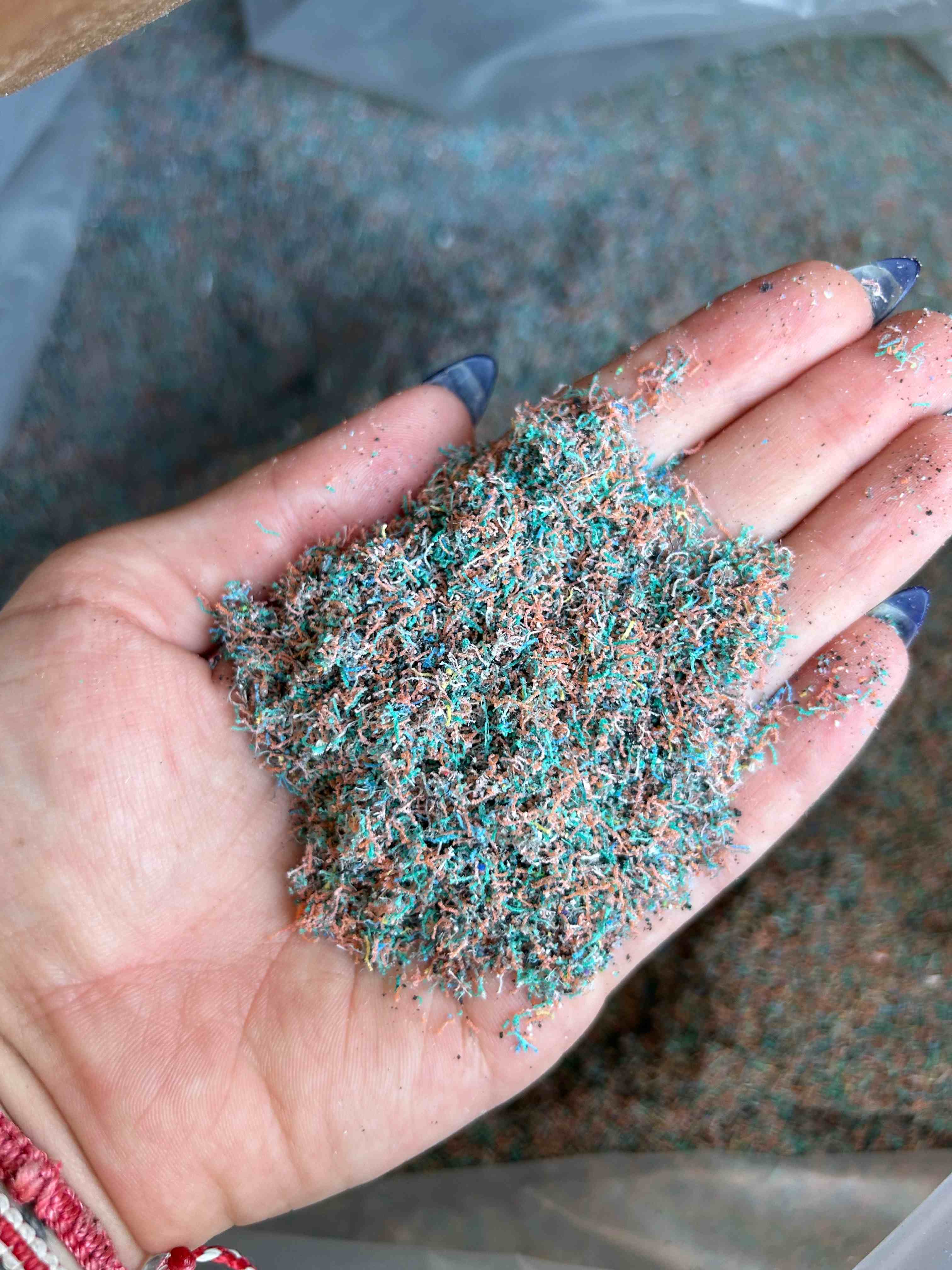
CMDR offers several scientific-grade polymer reference materials to help harmonize plastic pollution research!
CMDR News

Center for Marine Debris Research
Business Hours:
Monday - Friday, 9:00AM - 5:00PM